business by russell davies (CC BY-NC 2.0)
In the last two blog posts, I have written about gamification and education, gamification and motivation. For this one, I will talk about gamification and business.
As I wrote in the blog posts before, gamification contains some key elements, which are applied to non-gaming activities. Gamification can help motivate users’ engagement and interaction. So, how does it work on business and what is the effect?
It can be easily illustrated that how gamification works in business by giving some real examples. I believe that most people, especially for people of my age, know a famous coffee brand, Starbucks. According to Wells (2015), Starbucks can be regarded as one of the best examples of business gamification. So how exactly Starbucks uses gamification in its business?
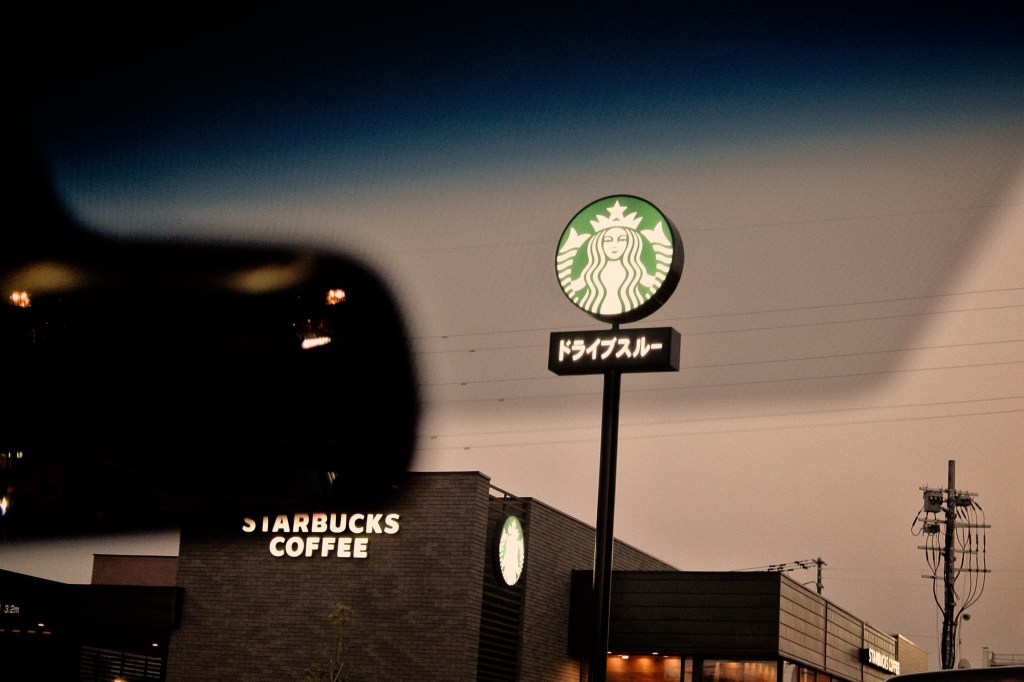
STARBUCKS. by MIKI Yoshihito (CC BY 2.0)
If you register the membership in Starbucks, you will find that every time you purchase a drink, you’ll get one to three “stars”. The stars are used to get rewards. If you have accumulated a certain level of stars, you can redeem for rewards. At least 25 stars can be redeemed for rewards (Starbucks 2021). The rewards include free drinks and food. You may find that one of the key elements are used in this case, which is rewards. Starbucks uses gamification to motivate customers’ desire to buy products, and the company can gain profit from it.
The target user of business gamification is not limited to customers, but can also be company employees. Due to Brain (2021), gamification strategy “can be used in businesses to enhance employee engagement, marketing efforts, and more”. Regarding this view, I would like to provide my own experience to prove it.
bonus by Mike Cohen (CC BY 2.0)
That was the summer holiday after I graduated from high school, I chose to do a part-time job to spend my vacation. The place I worked for was a bakery, and I chose to work there as a waitress. At that time, I found that my colleagues were very motivated in their work, and they are willing to continue working even during lunch break. I was very curious and asked why they work such actively. They told me that the owner of the bakery would give them bonuses based on daily sales. There was a set target for daily sales, and if they reached the target, each staff would get the bonuses, but not if they didn’t.
This is my own experience about the gamification used in business. In this scenario, bonuses can be regarded as the rewards of gamification, and it is proved that business gamification can motivate employees’ engagement.
Reference List
Brain Cameron (19 January 2021) ‘6 Gamification Strategy Tips for Your Business‘, everyonesocial, accessed 27 April 2021.
Mike Cohen (21 July 2018) bonus [photo], Flickr, accessed 27 April 2021. Available under Attribution 2.0 Generic (CC BY 2.0).
MIKI Yoshihito (18 October 2014) STARBUCKS. [photo], Flickr, accessed 27 April 2021. Available under Attribution 2.0 Generic (CC BY 2.0).
russell davies (6 October 2007) business [photo], Flickr, accessed 27 April 2021. Available under Attribution-NonCommercial 2.0 Generic (CC BY-NC 2.0).
Starbucks (2021) Rewards, Starbucks, accessed 27 April 2021.
Wells M (20 August 2015) ‘Top 10 best examples of gamification in business‘, MyCustomer, accessed 27 April 2021.
 yolandaguo