Let’s Meet ‘Healthy Mix’

Hi! What is your favourite food? Do you like healthy food? Such as fruit and vegetables? Have you ever worried about your weight? Or in other words, have you ever tried to lose your weight? In what way?

What do you eat every day for your breakfast, lunch, and dinner? Have you ever had any experiences that you had to solve your meal in a quite short time? If you have, what did you do when you face this situation?

If you have had the above two experiences, I mean ‘want to lose weight’ or ‘not enough time for the meal’, or if you are experiencing these, do not worry. Great news for you! My brand can help you solve these problems! Let’s say “Hello!” to ‘Healthy Mix’, a new brand for healthy meal replacement.
Healthy Mix Logo by Yue Guo

Healthy Mix is developing some healthy food mixtures with oats for people as a meal replacement. You may want to ask how I come up with Healthy Mix. Remember the question I asked above about what way have you tried to lose weight? According to my observation of some friends that want to lose their weight, most of them choose to try reducing their regular diets as the first step. I believe that this method is harmful to their health. So, I was thinking why not to create a brand developing healthy food products that can help lose weight? Oh, this does not mean that people do not have needs for losing weight are not welcomed to use our products. Healthy Mix welcomes everyone to try our products.

As for the situation that needs to solve meal in a short time, that is based on my own experience. When I was doing part-time job during the holiday, I found that sometimes I did not have enough time for my lunch because of the busy work. Oats would be a good choice for at this time, as it is healthy, and its eating method is also easy. However, I needed to prepare a set of dishware to eat. So, why not developing oats product with dishware inside?

Based on the above experiences, I combine the two ideas I get from them together and then create Healthy Mix.

Now maybe you want to ask a question, what exactly does Healthy Mix provide for us?

Healthy Mix, as a brand of healthy meal replacement, is developing some healthy food mixtures with oats, such as mixtures of fruit & nuts & oats, or vegetables & nuts & oats. Of course, our products are not just limited to these, we will develop more in the future. All products provided by Healthy Mix have no added sugar, and all the raw materials, such as fruit or vegetables, are healthy food. So, Healthy Mix promises that we provide you with 100% healthy products.
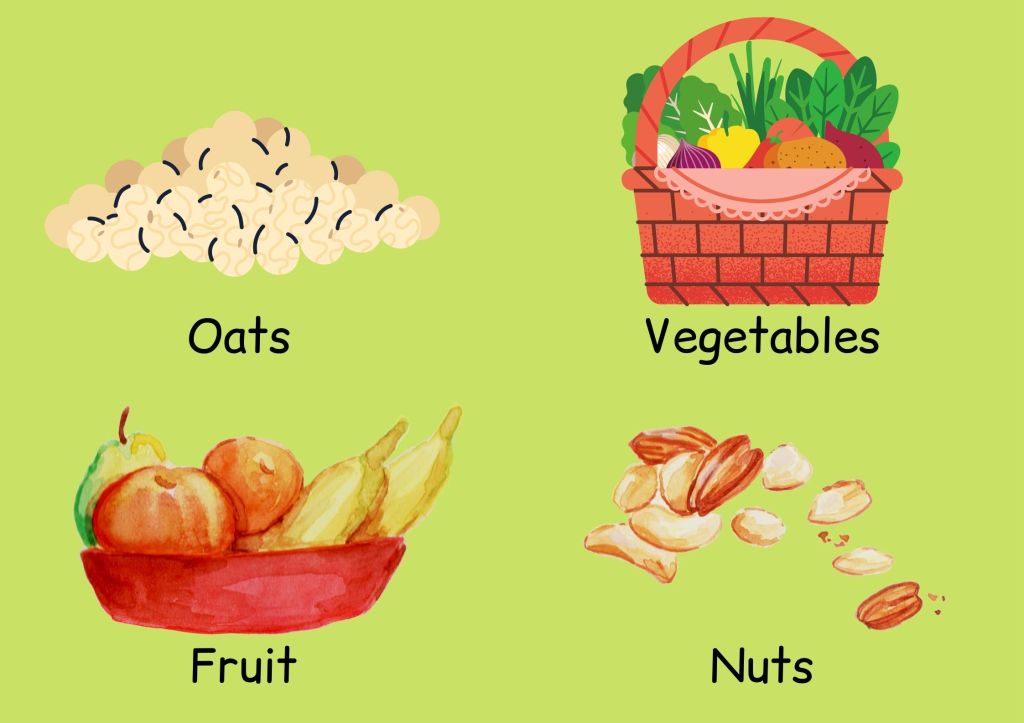
Ingredients by Yue Guo

Remember I mentioned above that Healthy Mix can help you lose weight? So how does it help? After you eat any kinds of mixtures we produce, you will find that you feel very full. In fact, our products can help increase your feeling of fullness, and you even do not need to eat anything for the next half day whether you eat our product in the morning, noon, or evening. For people who want to lose weight efficiently, Healthy Mix can provide you with such an efficient and healthy way. Also, all products we provide contain sufficient nutrition, vitamin, and protein. So, you do not need to worry about health and nutrition problems.
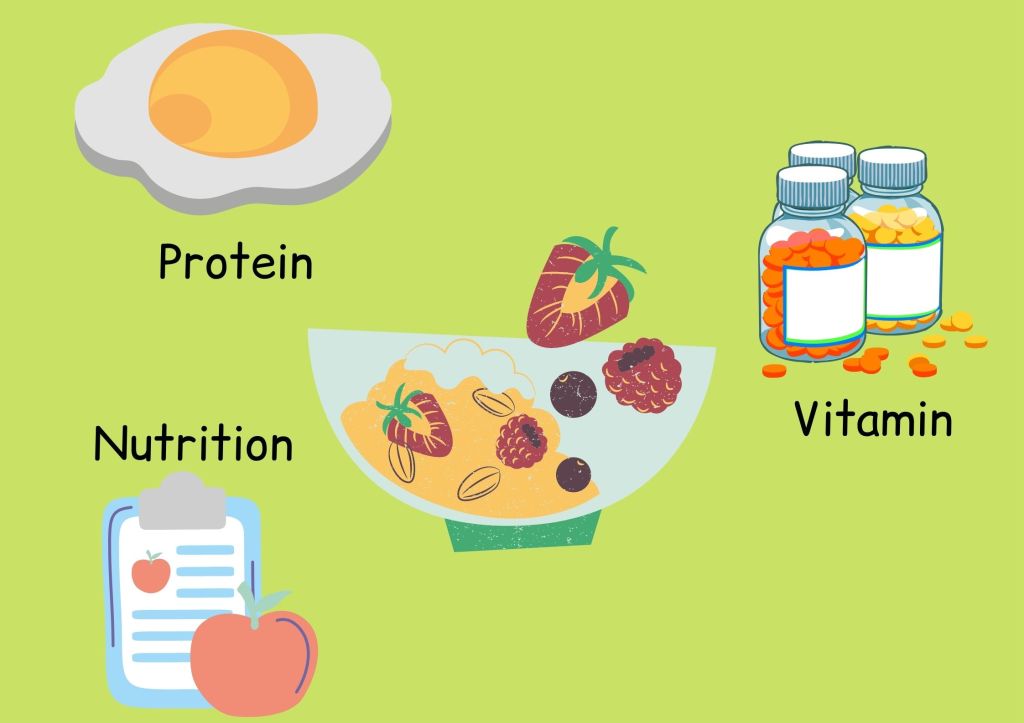
Nutrition by Yue Guo

What else? Healthy Mix can also provide you with a lot of convenience, and this reflects on its unique packaging. We provide a set of disposable dishware inside the package of every product, including a bowl and a spoon, and they are recyclable. So, if you experience a situation that you must solve meal in a short time, it will be convenient for you to use our products. Just pour the mixture into the dishware and add some water then stir them, everything is done. 5 minutes at most!
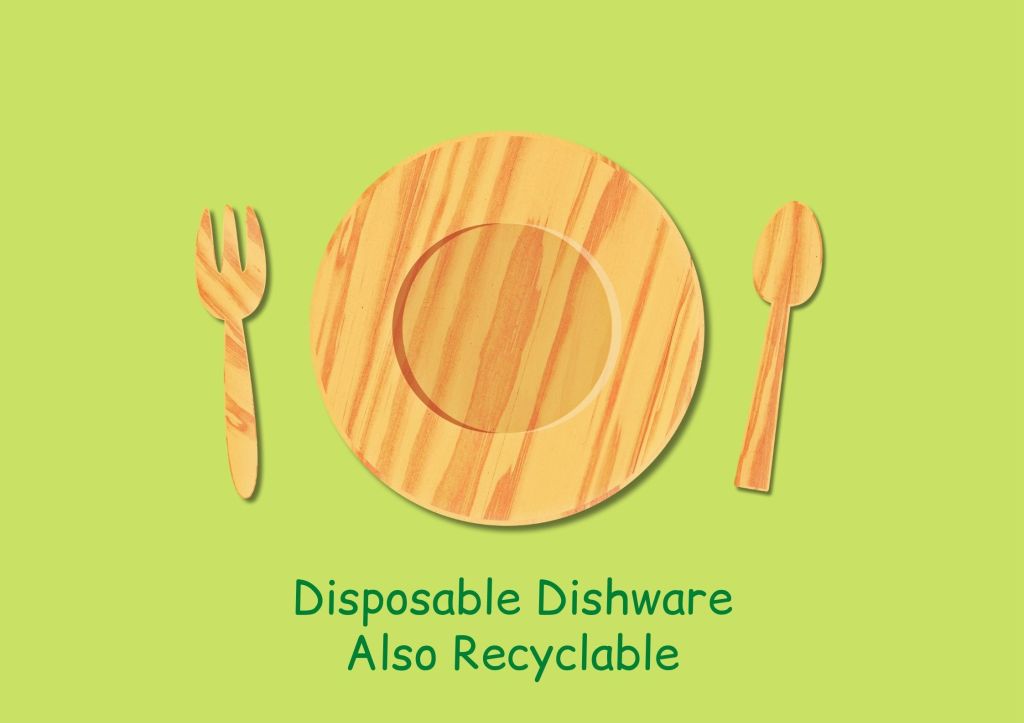
Disposable dishware by Yue Guo

However, we do have limitations. Healthy Mix is a new brand, and the main challenge it will face is low brand awareness. Most customers are not familiar with Healthy Mix, but this kind of risk can be mitigated by using social media channels and advertising the brand to make the public get to know us gradually. Creating an own website can also be a good choice. In addition, lack of financial support is also a challenge for Healthy Mix, so we are looking for investors to invest the brand and make our business run.

Hopefully, now you may have a basic understanding of Healthy Mix, and we hope that you will choose to try our products after Healthy Mix is listed.
ALM 201 Assessment 2 – Gamification and Business

Pile of cash with text Business by Marco Verch Professional Photographer (CC BY 2.0)

Nowadays, gamification has become a popular trend, and it is widely used in a range of industries, including education, business, etc. In this blog post, I will focus on illustrating how exactly gamification works in business and what effects are.

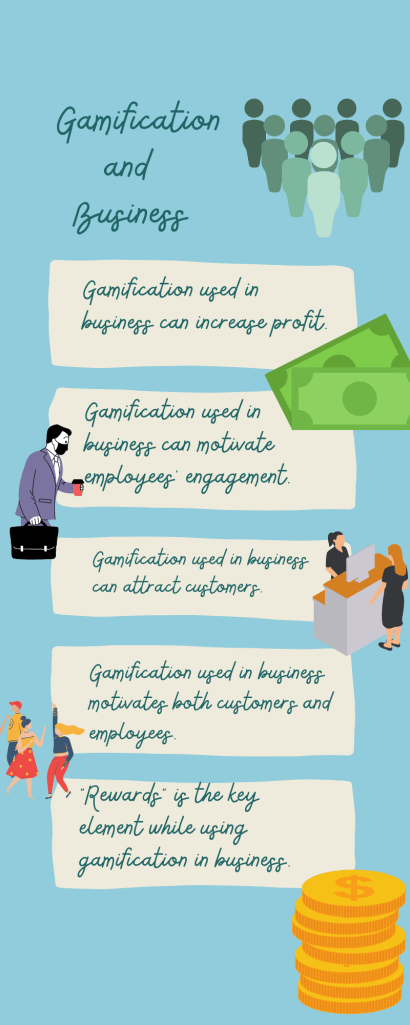
Due to Wünderlich et al. (2019), business gamification refers to relate some game elements with businesses, and it is used to build an interactive relationship between the customer and brands, business gamification can also be used to motivate employees’ engagement. As I listed in the infographic below, the target user of business gamification is not limited to customers but can also be company employees. In the following content, I will provide two examples of business gamification where the target audiences are customers and employees respectively, and these examples can illustrate some of the positive effects of business gamification.

Infographic of Gamification and Business by Yue Guo

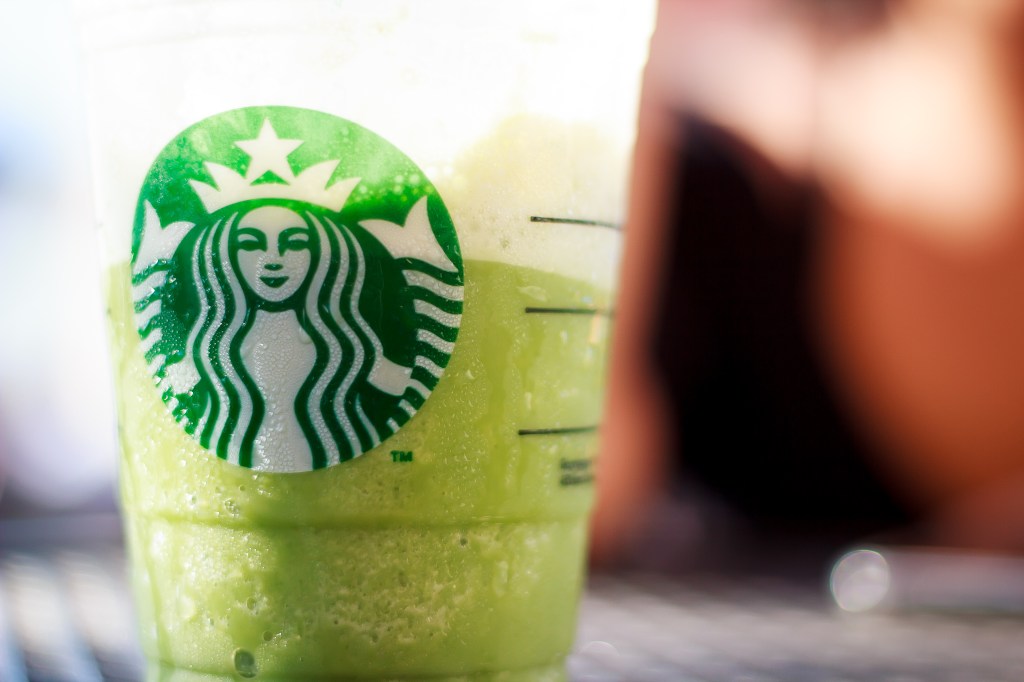
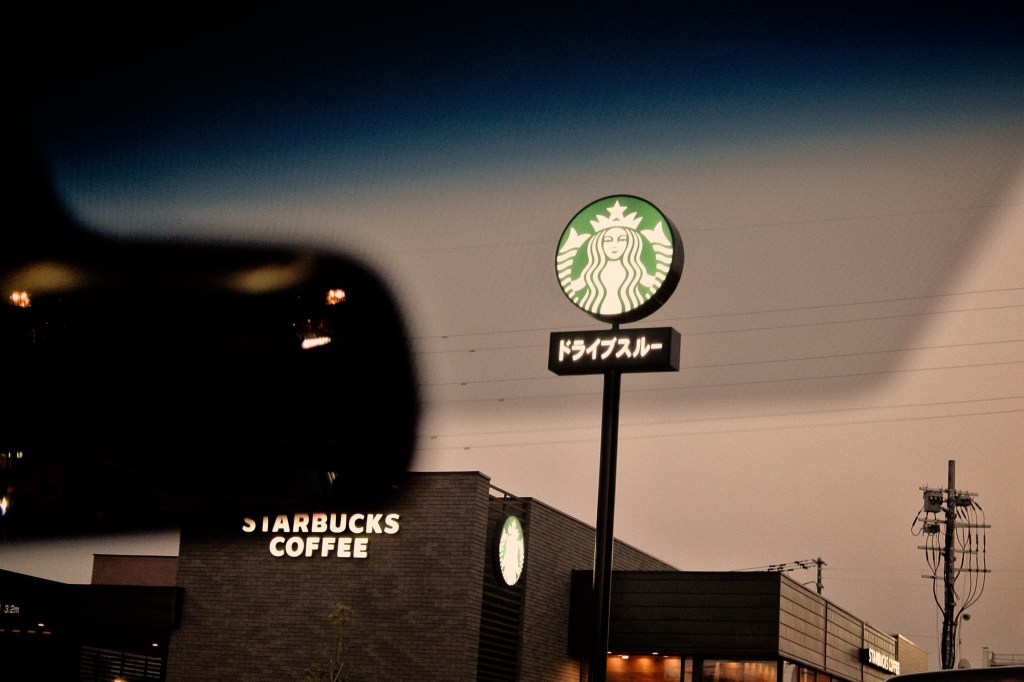
The first example is Starbucks, one of the most famous coffee brands in the world. According to Wells (2015), Starbucks can be regarded as one of the best examples of business gamification. The “star system” is the method of business gamification used by Starbucks (Starbucks 2021). If customers register the membership in Starbucks, they will find that they can get one to three “stars” every time they purchase a drink. If customers have accumulated a certain level of stars, they can redeem for rewards, which include free drinks and food. It can be realized that one of the key elements of gamification is used in this case, which is rewards. Starbucks uses gamification to motivate customers’ desire to buy products, and the company can gain profit from it.

Starbucks by Noel Reinhold (CC BY 2.0)

Regarding the effects on employees, due to Brain (2021), gamification “can be used in businesses to enhance employee engagement, marketing efforts, and more”. According to Vinichenko et al. (2016), business gamification is the most effective way to improve employees’ motivation. These two views can be proved by the following example, which is based on my own experience.

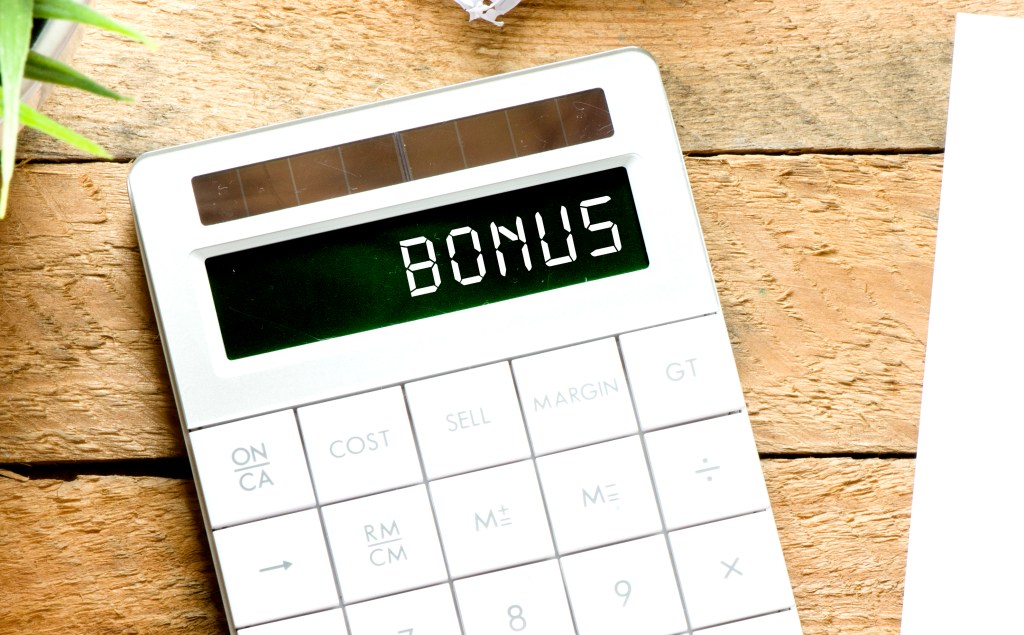
bonus by Mike Cohen (CC BY 2.0)

Summarizing my experience briefly, that was the time when I was doing a part-time job in a bakery. My colleagues told me that the owner of the bakery would give them bonuses based on daily sales. There was a set target for daily sales, and if they reached the target, each staff would get the bonuses, but not if they didn’t. So, they were very motivated in their work and were willing to continue working even during lunch break. In this scenario, bonuses can be regarded as the rewards of gamification, and it is proved that business gamification can motivate employees’ engagement and increase their performance effectively (Kanazawa 2019).

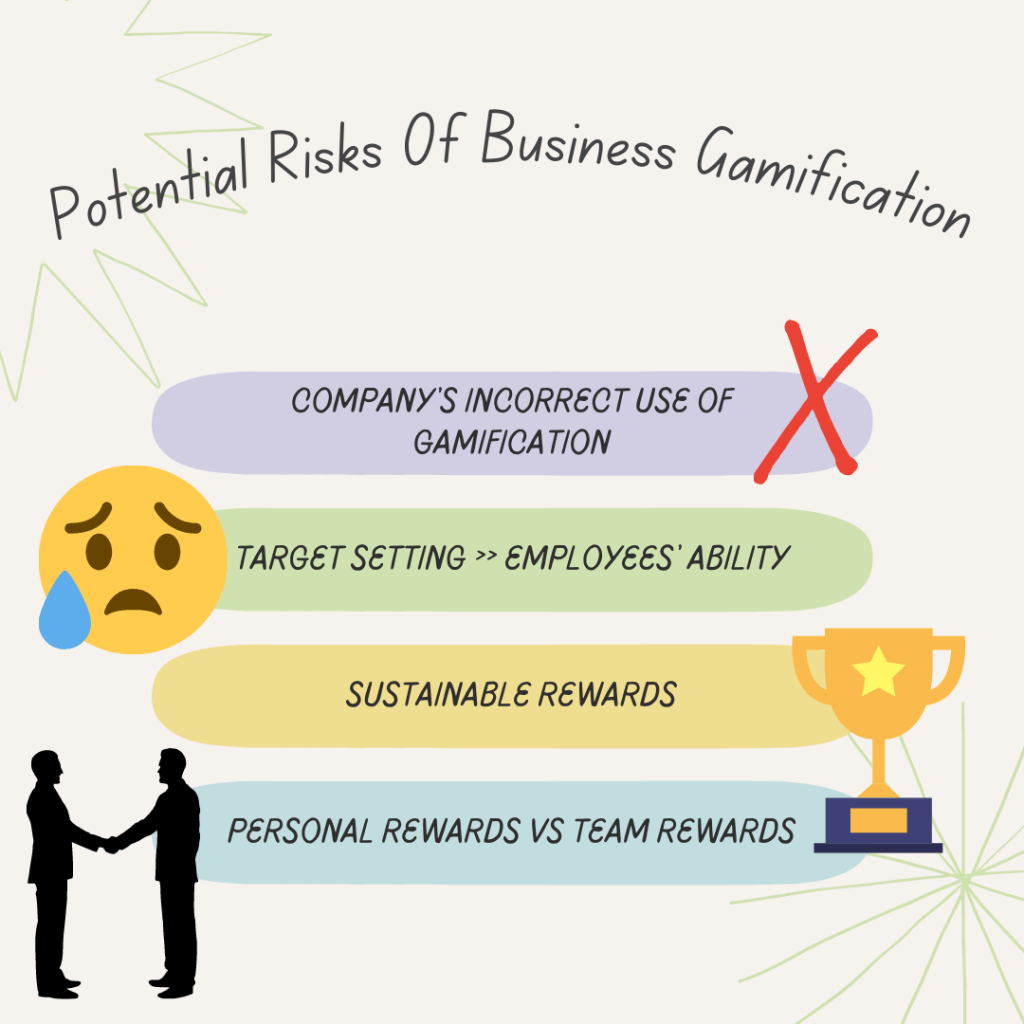
Potential Risks of Business Gamification Infographic by Yue Guo

However, except the positive effects, are there no negative effects of gamification used in business? The answer is yes, business gamification does exist some potential negative effects. According to Callan RC et al. (2015), some of the potential risks of business gamification, including companies using business gamification incorrectly, can lead to a failure in employee training. For example, in the experience I described above, if the set target for daily sales is unrealistic, such as selling 100,000 dollars a day to get bonus, then the problem is shown. This shows one of the potential negative effects of business gamification, which is setting a target to get rewards that is far beyond the ability of employees (Callan RC et al. 2015).

There is another potential risk that cannot be ignored, which is the rewards that company provided need to be sustainable (Callan RC et al. 2015). If employees are used to rewards, their demand for them will increase as time passes. If no new incentives are provided, they will lose motivation. The other potential risk is the destructive competition among the employees. Companies should set goals for individual employees and then give them team goals that require cooperation with their colleagues at the same time. This will avoid that the employees focus only on personal achievements and ignore other overall tasks, and also avoid the possible tension among individuals caused by employees’ competition (Turco 2013).

In conclusion, gamification used in business has both positive and negative effects. Companies should pay attention to use business gamification reasonably and try to avoid potential risks.

Reference List

Brain Cameron (19 January 2021) ‘6 Gamification Strategy Tips for Your Business‘, everyonesocial, accessed 27 April 2021.

Callan RC, Bauer KN and Landers RN (2015) ‘How to Avoid the Dark Side of Gamification: Ten Business Scenarios and Their Unintended Consequences’, in Reiners T and Wood L (eds) Gamification in Education and Business, Springer, Cham.

Kanazawa M (3 September 2019), ‘Using Gamification in Business to Increase Performance‘, mambo.io, accessed 28 April 2021.

Marco Verch Professional Photographer (15 January 2019) Pile of cash with text Business [photo], Flickr, accessed 27 April 2021. Available under Attribution 2.0 Generic (CC BY 2.0).

Mike Cohen (21 July 2018) bonus [photo], Flickr, accessed 27 April 2021. Available under Attribution 2.0 Generic (CC BY 2.0).

Noel Reinhold (4 August 2012) Starbucks [photo], Flickr, accessed 28 April 2021. Available under Attribution 2.0 Generic (CC BY 2.0).

Starbucks (2021) Rewards, Starbucks, accessed 27 April 2021.

Turco K (10 July 2013) ‘It’s Not All Fun and Games; Potential Risks of Gamification’, TechnologyAdvice, accessed 28 April 2021.

Vinichenko MV, Melnichuk AV, Kirillov AV, Makushkin SA and Melnichuk YA (2016), ‘Modern Views on the Gamification of Business‘, Journal of Internet Banking and Commerce, accessed 28 April 2021.

Wells M (20 August 2015) ‘Top 10 best examples of gamification in business‘, MyCustomer, accessed 27 April 2021.

Wünderlich N, Gustafsson A and Hamari J (2019), ‘The great game of business: Advancing knowledge on gamification in business contexts’, Journal of Business Research, http://dx.doi.org/10.1016/j.jbusres.2019.10.062

ALM 201 – Gamification and Business

business by russell davies (CC BY-NC 2.0)

In the last two blog posts, I have written about gamification and education, gamification and motivation. For this one, I will talk about gamification and business.

As I wrote in the blog posts before, gamification contains some key elements, which are applied to non-gaming activities. Gamification can help motivate users’ engagement and interaction. So, how does it work on business and what is the effect?

It can be easily illustrated that how gamification works in business by giving some real examples. I believe that most people, especially for people of my age, know a famous coffee brand, Starbucks. According to Wells (2015), Starbucks can be regarded as one of the best examples of business gamification. So how exactly Starbucks uses gamification in its business?

STARBUCKS. by MIKI Yoshihito (CC BY 2.0)

If you register the membership in Starbucks, you will find that every time you purchase a drink, you’ll get one to three “stars”. The stars are used to get rewards. If you have accumulated a certain level of stars, you can redeem for rewards. At least 25 stars can be redeemed for rewards (Starbucks 2021). The rewards include free drinks and food. You may find that one of the key elements are used in this case, which is rewards. Starbucks uses gamification to motivate customers’ desire to buy products, and the company can gain profit from it.

The target user of business gamification is not limited to customers, but can also be company employees. Due to Brain (2021), gamification strategy “can be used in businesses to enhance employee engagement, marketing efforts, and more”. Regarding this view, I would like to provide my own experience to prove it.

bonus by Mike Cohen (CC BY 2.0)

That was the summer holiday after I graduated from high school, I chose to do a part-time job to spend my vacation. The place I worked for was a bakery, and I chose to work there as a waitress. At that time, I found that my colleagues were very motivated in their work, and they are willing to continue working even during lunch break. I was very curious and asked why they work such actively. They told me that the owner of the bakery would give them bonuses based on daily sales. There was a set target for daily sales, and if they reached the target, each staff would get the bonuses, but not if they didn’t.

This is my own experience about the gamification used in business. In this scenario, bonuses can be regarded as the rewards of gamification, and it is proved that business gamification can motivate employees’ engagement.

Reference List

Brain Cameron (19 January 2021) ‘6 Gamification Strategy Tips for Your Business‘, everyonesocial, accessed 27 April 2021.

Mike Cohen (21 July 2018) bonus [photo], Flickr, accessed 27 April 2021. Available under Attribution 2.0 Generic (CC BY 2.0).

MIKI Yoshihito (18 October 2014) STARBUCKS. [photo], Flickr, accessed 27 April 2021. Available under Attribution 2.0 Generic (CC BY 2.0).

russell davies (6 October 2007) business [photo], Flickr, accessed 27 April 2021. Available under Attribution-NonCommercial 2.0 Generic (CC BY-NC 2.0).

Starbucks (2021) Rewards, Starbucks, accessed 27 April 2021.

Wells M (20 August 2015) ‘Top 10 best examples of gamification in business‘, MyCustomer, accessed 27 April 2021.

ALM 201 – Gamification and Motivation

Motivations by Nichole Burrows (CC BY 2.0)

In the last blog post, I talked about gamification and education. In this one, I would like to write about gamification and motivation.

Gamification can be used in different areas. As I wrote in the last blog post, using gamification in education can motivate students’ engagement. According to Alsawaier (2017), “The use of gamification could provide a partial solution to the decline in learners’ motivation and engagement the schooling system is facing today”. So, what exactly is the effect of gamification on motivation and how does it work?

The effect of gamification on motivation can be clearly shown by listing some examples. For instance, imagine you are a student, and you are now listening to a teacher. This teacher is teaching in a very traditional way, he is reading complex points in a common tone. So in this case, do you feel drowsy? Do you feel that you do not want to continue listening to him anymore? Now let’s move to another teacher’s class, she is leading a quiz game about the knowledge that she is teaching, and the students who get it right get candy from the teacher! So if you need to make a choice to attend one of the classes taught by the two teachers, which one would you like to choose? I do believe that you will choose the second teacher, as she could motivate students’ engagement with learning by playing small game with them and providing rewards.

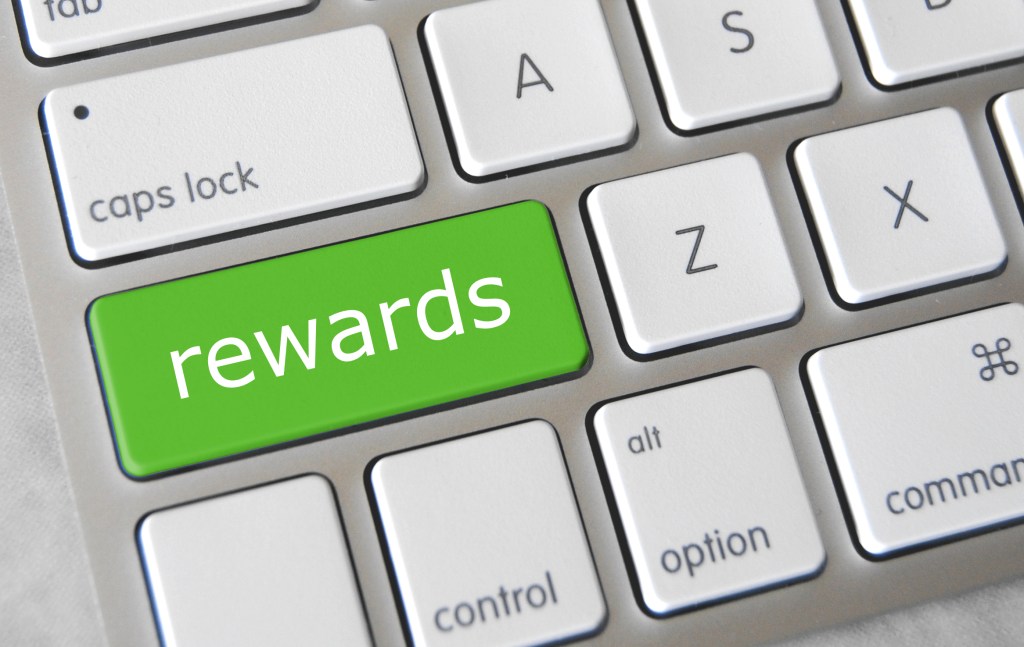
Rewards by GotCredit (CC BY 2.0)

In the example I list above, you may realize that one of the key elements of gamification is shown, which is rewards. According to Boulet (2016), gamification can stimulate students’ motivation to learn, and students will work hard to get rewards. However, the effect of gamification on motivation can be both positive and negative, and it depends on the target user. For some students, if there is no reward, they will lose the motivation to learn, and they may even not complete the task. So that’s why gamification’s effect on motivation depends on the user itself. For me, gamification can really arouse my enthusiasm for learning. We should try to avoid some of the potential negative effects of gamification, and at the same time, we should believe that using gamification is a good way for us to stimulate and maintain motivation.

Reference List

Alsawaier RS (2017) ‘The Effect of Gamification on Motivation and Engagement’, International Journal of Information and Learning Technology, 35(1): 56-79, http://dx.doi.org/10.1108/IJILT-02-2017-0009

Boulet G (23 July 2016) ‘Gamification And Motivation: It’s The Content That Matters, Not The Container‘, eLearning Industry, accessed 26 April 2021.

GotCredit (16 March 2015) Rewards [photo], Flickr, accessed 26 April 2021. Available under Attribution 2.0 Generic (CC BY 2.0).

Nichole Burrows (19 June 2015) Motivations [photo], Flickr, accessed 26 April 2021. Available under Attribution 2.0 Generic (CC BY 2.0).

ALM 201 – Gamification and Education

Education by GotCredit (CC BY 2.0)

For my first blog post of ALM 201, I would like to share my experience with gamification using in education.

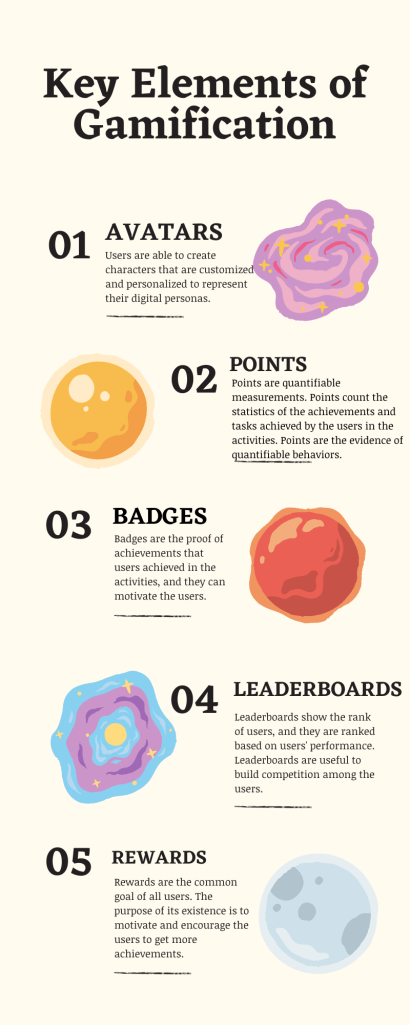
Firstly, I need to explain what gamification is. According to Bosomworth (2011), gamification is “the process of using game thinking and mechanics to engage an audience and solve problems”. In my own understanding, gamification include some key elements, the image below is the infographic that I made by myself.

As the infographic shows, there are 5 key elements of gamification, which are avatars, points, badges, leaderboards and rewards. According to Dichev and Dicheva (2017), gamification used in education is in order to encourage the students’ motivation and engagement by applying game principles to the learning environment.

After uderstanding what gamification is and why it can be used in eductaion, I would like to share my own experience of gamification in education.

As I mentioned in the first assignment of this course, my first experience with gamification used in education happened when I was in kindergarten. When you see the word “kindergarten”, you may understand what kind of experience that I am going to write. Yes, I think most people know that teachers in kindergarten always play some games with kids while they are teaching some knowledge. That is what I want to share. When I was in kindergarten, at that time, most kids did not like math, because they thought math is complex and difficult to learn. So, our teacher taught us math by playing some simple games with us, this is in order to motivate our participation and interest about math. The teacher asked us question, and we answered by raising one of our hands. The kid who raised his/her hand the quickest and answer the question correctly would get candies as rewards.

Even now, I am studying in university, some teachers still use the way of rewarding candies by answering questions to motivate our enthusiasm for learning, and also playing some small games with students in the class. Also, in this course, we use Twitter to communicate and study, we can share our mood while we are studying by using some interesting gifs or videos, and we can also create some infographics about specific knowledge. These can also be regarded as gamification in learning if you think a “like” to your tweet from your teacher and classmates is a kind of rewards. I do believe using gamification in education is a good way for teachers to teach students.

Reference List

Bosomworth D (26 July 2011) ‘Gamification – what is it and why is it important?‘, SmartInsights, accessed 26 April 2021.

Dichev C and Dicheva D (2017) ‘Gamifying education: what is known, what is believed and what remains uncertain: a critical review’, International Journal of Educational Technology in Higher Education, 14(9), https://doi.org/10.1186/s41239-017-0042-5

GotCredit (16 January 2019) Education [photo], Flickr, accessed 26 April 2021. Available under Attribution 2.0 Generic (CC BY 2.0).

Week 9 Workshop #ALA102DC

The 5 loglines below are designed for the advertisement of Melbourne City Rooftop Honey: https://www.rooftophoney.com.au/

1. Honey disappears in the world, and people become sad. Then a bee becomes a warrior fighting for people and gains the honey at last.

2. The honey bee is flying in Melbourne City, and it meets a little girl who is eating honey. The bee leads the girl to a park made of honey and plays with her.

3. A lonely honey bee is flying across the Melbourne City and trying to find a place that it can stay. Then it sees a lot of bees on the rooftop, so it flies there and joins them.

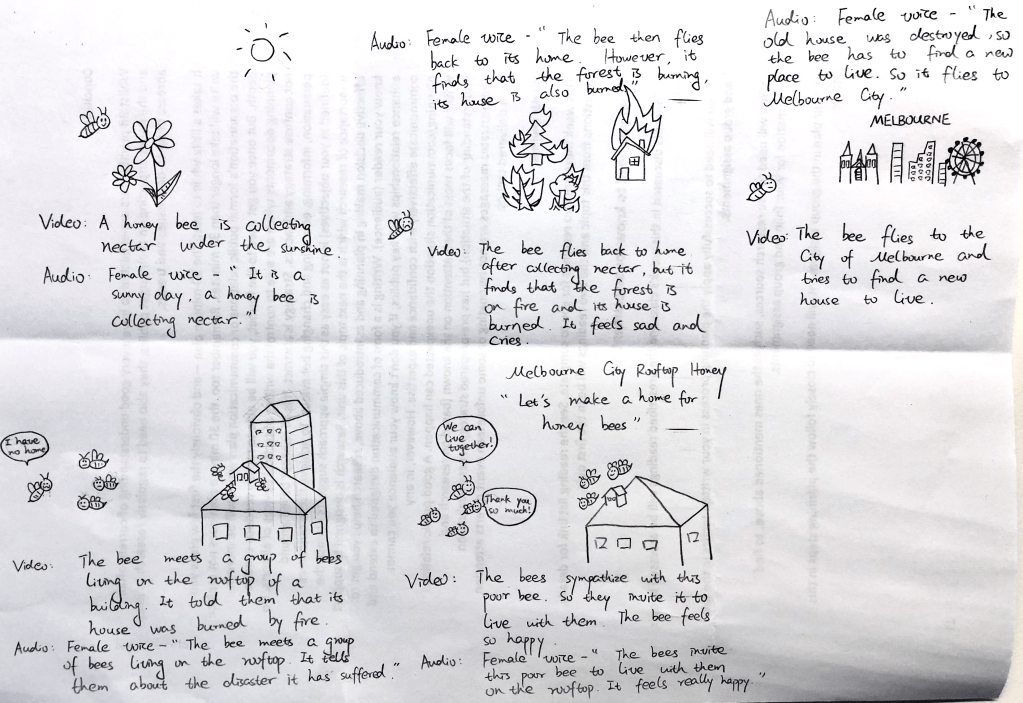
4. A honey bee has lost its home because of the natural disaster, then it flies to the City of Melbourne to find its new home. Then the bees living on the rooftop invites it to live with them.

5. The family members of a honey bee come back home in the forest and tell it that they have found an unusual house in Melbourne City. Then the bee comes to the new house with its family members, which is a rooftop in the City of Melbourne.

Week 8 Workshop Part 2 #ALA102DC

Melbourne City Rooftop Honey: https://www.rooftophoney.com.au/

Background

Melbourne City Rooftop Honey is a honey brand from the City of Melbourne since 2010. The aim of this project is to raise awareness of the importance of bees and the vital role that they play in our ecosystems while creating delicious honey, and also to help save the honey bee from the various threats of disease and human habitation (Melbourne City Rooftop Honey 2020). The brand is special because of its honey is produced on the rooftop. The beekeepers place hives on the roof spaces of restaurants, hotels and gardens around the City of Melbourne, that is why the brand’s name is called “Melbourne City Rooftop Honey” (Melbourne City Rooftop Honey 2020).


“Honey Fingers” is one of the competitors located in Melbourne. This brand makes some artworks by using hive. These artworks could show the ‘bee cultures’ to the audience, and they can also be used to explore the intersection between bees and humanity (Honey Fingers 2020).


During the current Covid-19 situation in Australia, Melbourne City Rooftop Honey will not resume its normal business until spring arrives. According to data, the demand for packaged food in 2020 is almost four times that in 2019 (Jones 2020). In this challenging time, Melbourne City Rooftop Honey can still provide fresh and healthy honey for local clients by online ordering.


According to Sparkol (2015), the archetype of Melbourne City Rooftop Honey should be ‘The Nurturer’. ‘The nurturer is driven by their need to protect and care for others’ (Sparkol 2015). Melbourne City Rooftop Honey can still provide healthy honey for local clients by online shopping during the Covid-19 situation, this can be regarded as ‘offer protection, safety and support to their customers’ (Sparkol 2015).

Objectives

The objective of this ad is to persuade the audiences to believe that Melbourne City Rooftop Honey is a trustworthy brand. It can still provide fresh honey for the audiences although during the Covid-19 situation, and it can also guarantee the quality and safety of the honey provided. This is a kind of persuasion.

Target Audience

The target audiences are the local residents aged between 30 and 34 years old in Melbourne, which are almost 368,000 people (Australian Bureau of Statistics 2020). They may work part-time and they may also work full-time, and their salaries should between $50,000 to $100,000 per year. The audiences have health awareness and pay great attention to their own health.

Single Minded Proposition

Let’s protect honey bees.


Let’s make a home for honey bees.


Melbourne City’s unusual home for honey bees.


Honey can benefit our health.


Fresh honey produced in Melbourne City.

Substantiation

Honey contains a lot of nutrients required by the human body (Gunnars 2018).

‘The honey bee plays a very important role in the sustainability of the food supply chain as they are the key to the pollination of the agricultural and horticultural crops which ultimately produces a very large proportion of the food that we all eat’ (Melbourne City Rooftop Honey 2020).

‘Looking to the future, as we expand on concepts of growing food in our cities & making them cooler, greener & more sustainable – It is vital to protect honey bees and include them in our cities and sprawling urban landscapes’ (Melbourne City Rooftop Honey 2020).

Tone of voice

Compassionate, generous and strong.

Media requirements

A 30-second Youtube advertisement.

Mandatories

Logo, socials, web address.

Reference List

Australian Bureau of Statistics 2020, 2016 Census QuickStats: Greater Melbourne, Australian Bureau of Statistics, retrieved 4 May 2020, <https://quickstats.censusdata.abs.gov.au/census_services/getproduct/census/2016/quickstat/2GMEL?opendocument>.

Gunnars, K 2018, ’10 Surprising Health Benefits of Honey’, healthline, 5 September, retrieved 4 May 2020, <https://www.healthline.com/nutrition/10-benefits-of-honey>.

Honey Fingers 2020, Info, Honey Fingers, retrieved 5 May 2020, <https://honeyfingers.com.au/Info>.

Jones, K 2020, ‘The Pandemic Economy: What are Shoppers Buying Online During COVID-19?’, Visual Capitalist, 8 April, retrieved 5 May 2020, <https://www.visualcapitalist.com/shoppers-buying-online-ecommerce-covid-19/>.

Melbourne City Rooftop Honey 2020, Covid-19 Update, Melbourne City Rooftop Honey, retrieved 4 May 2020, <https://www.rooftophoney.com.au/pages/covid-19-update>.

Melbourne City Rooftop Honey 2020, Why We Are Doing This?, Melbourne City Rooftop Honey, retrieved 4 May 2020, <https://www.rooftophoney.com.au/pages/about>.

Sparkol 2015, ‘The 12 brand archetypes all successful businesses are built on’, Sparkol, web blogpost, 1 September, retrieved 4 May 2020, <https://www.sparkol.com/en/blog/the-12-brand-archetypes-all-successful-businesses-are-built-on>.

Week 8 Workshop Part 1 #ALA102DC

Headline: Fake news is not our friend.

Body copy: We’re absolutely committed to helping to reduce the spread of what is commonly described these days as fake news. We’re doing this by employing large numbers of expertly trained fact-checkers right across the world, seeking to improve the cutting-edge technology that identifies fake news, and giving you all the in-depth background information that you need on the articles that are in your News Feed.

Call to action: Find out how we’re addressing the spread of fake news by going to fb.me/fbchangesAU

Insert: Facebook logo

Step 1

New body copy: Say NO to Fake News! We are committed to resisting the fake news by seeking to improve the cutting-edge technology that identifies them.

Step 2

6-word body copy: Let’s Say NO to Fake News!

Step 3

Problem 1: The face of this famous person takes a large part of the poster, which will attract people’s more attention to the face instead of the content.

Problem 2: No need to text “PHARRELL WILLIAMS” on the poster, it will be much more attractive than the most important content of the poster.

Step 4

Target audience: Mothers aged 30 – 50

  1. Is the text more important than your life?
  2. Your family members are waiting for you to go back home.
  3. Think of your children, they are waiting for you.
  4. Do not make your children lose their mother.
  5. Go back home and say “I love you” to your children.
  6. Your children are waiting for you to go back home and hug them.
  7. Do not be killed by typing the text.
  8. Your kids need you. Go back home and kiss them.
  9. Love your life, no text when driving.
  10. The text is much less important than your children.

I would like to choose “The text is much less important than your children.” as the headline. The words “your children” are obviously targeted at mothers. Mother’s love for children is selfless. Once mothers see this headline, they will think about their children, then they will avoid texting when driving cause they want to go back home safely and stay with their kids.

通过 WordPress.com 设计一个这样的站点
从这里开始